
From Vision to Reality: A Guided Visit Through Oxford’s Schwarzman Centre
The Lynrace team was kindly invited for a private tour of the new Schwarzman Centre ahead of the public cultural programme launch, where we were shown around by Simon Barfoot, Head of Building Operations, and Alexandra Vincent, Chief Operating Officer for the Humanities Division and Managing Director of the Schwarzman Centre. Being guided through the building by those leading its delivery offered a valuable insight into both its design and operation.
Nestled just behind the Blavatnik School of Government, the new Humanities Centre for the University of Oxford is a significant addition to the city’s cultural landscape.
The first impression is one of scale and clarity. Rising 7 metres above the roofline and spanning 19 metres in diameter, the Great Hall is defined by a vast glass dome which immediately establishes a strong sense of occasion on arrival.
At ground level, the building opens itself up in a way that feels deliberate and progressive. It is the first building in the University’s history designed from the outset as a genuinely public space, welcoming both students and the wider community. For a University often perceived as inward-looking, this marks a clear shift. The doors are open daily, with no ticket required. The café, operated by BaxterStorey using locally sourced ingredients, reinforces this accessibility, offering a place to sit and spend time without expectation.
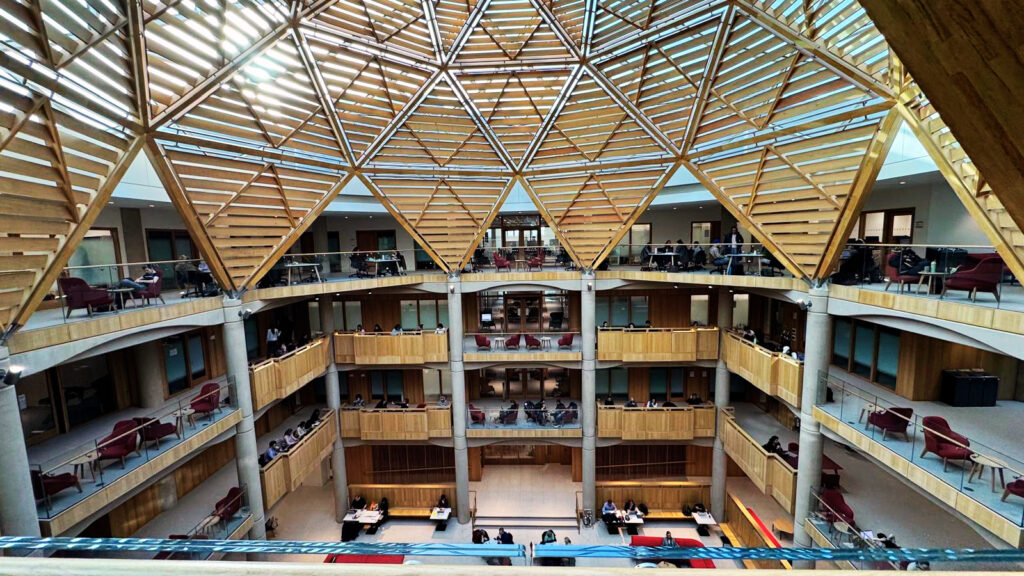
The Great hall, Schwarzman Centre
Image Credit: Lynrace 2026
Planning constraints relating to the Carfax Tower height limit required the building to extend outward and downward rather than upward. This has been used to advantage. Beneath ground level sits a series of performance spaces, anchored by the Sohmen Concert Hall. With a 500-person capacity and designed to Passivhaus standards, it is understood to be the world’s first of its kind. The acoustic performance, developed by Arup, targets an exceptionally low noise rating of 10, creating an environment suited to unamplified orchestral music. When amplification is required, a state-of-the-art d&b system is deployed in a way that does not compromise the architecture.
Supporting spaces include an 87-seat cinema, a 250-seat flexible theatre, and a Black Box Performance Lab equipped with immersive surround sound. The integration of Dolby Atmos across studios adds further versatility, enabling a wide range of uses, from intimate screenings to large-scale performances.
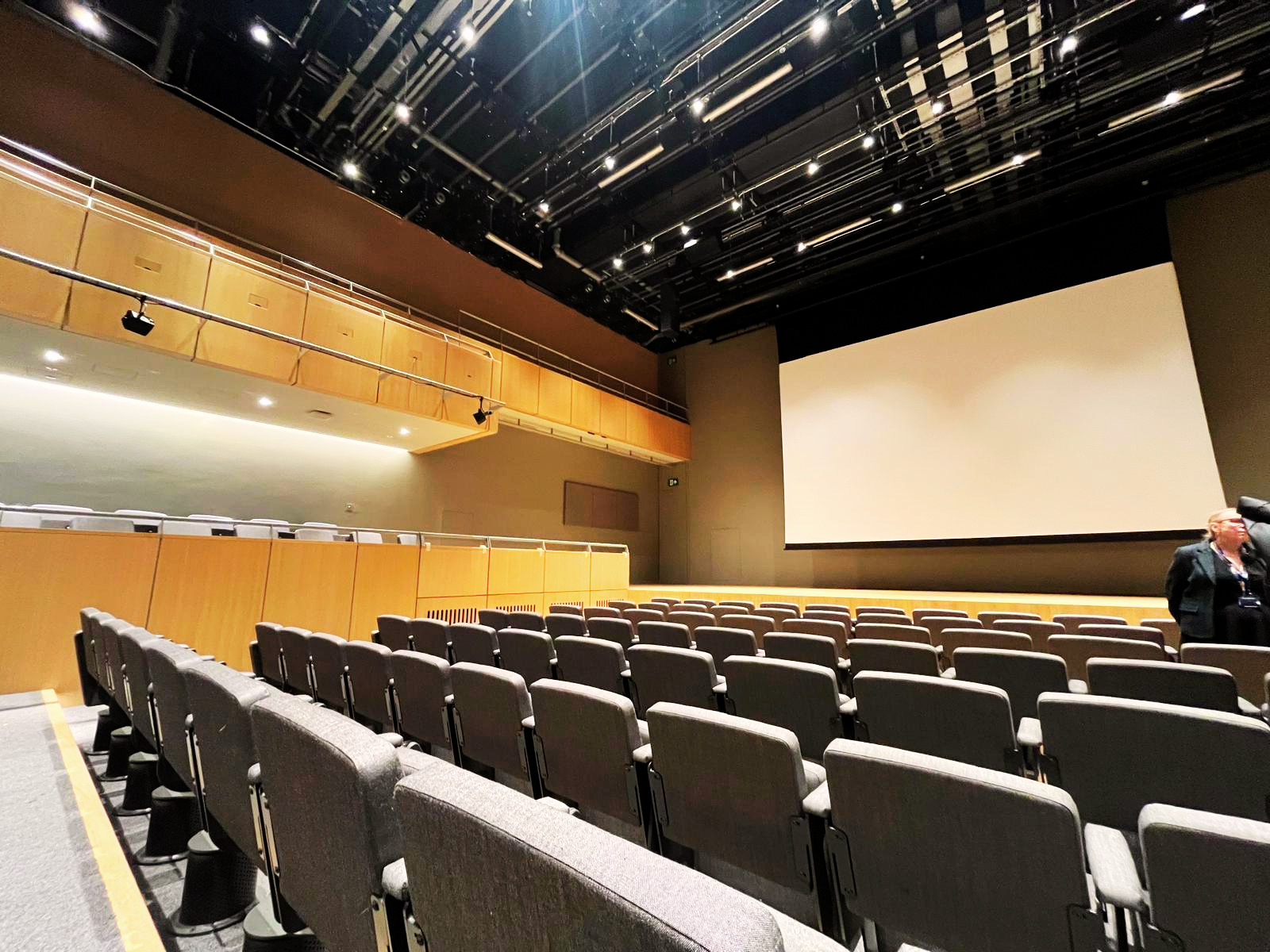
Flexible Theatre, Schwarzman Centre
Image Credit: Lynrace 2026
The Schwarzman Centre represents a confident and considered addition to Oxford. There is a quiet assurance in its design, nothing overstated, yet everything resolved. Jericho is very fortunate to gain what will undoubtedly become a vibrant and enduring cultural anchor.
For a team focused on how spaces shape experience, the visit was both insightful and inspiring. What will be most interesting is how the building embeds itself within the life of the city over time, and how its cultural programme continues to evolve.
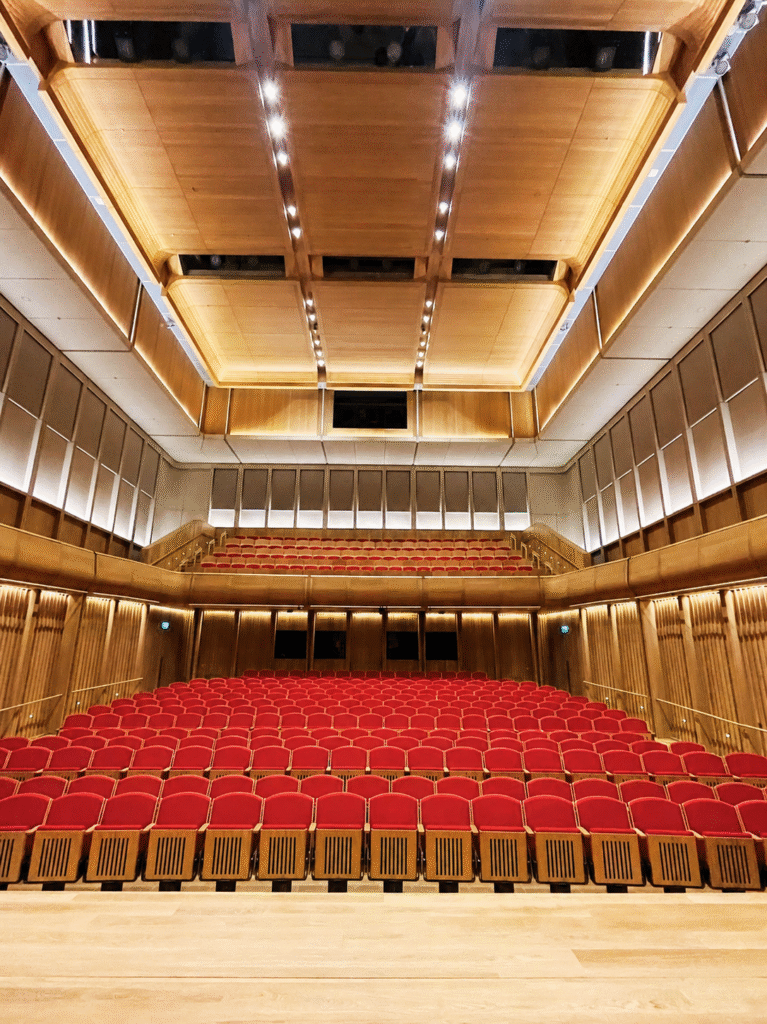
Concert hall, Schwarzman Centre
Image Credit: Lynrace 2026